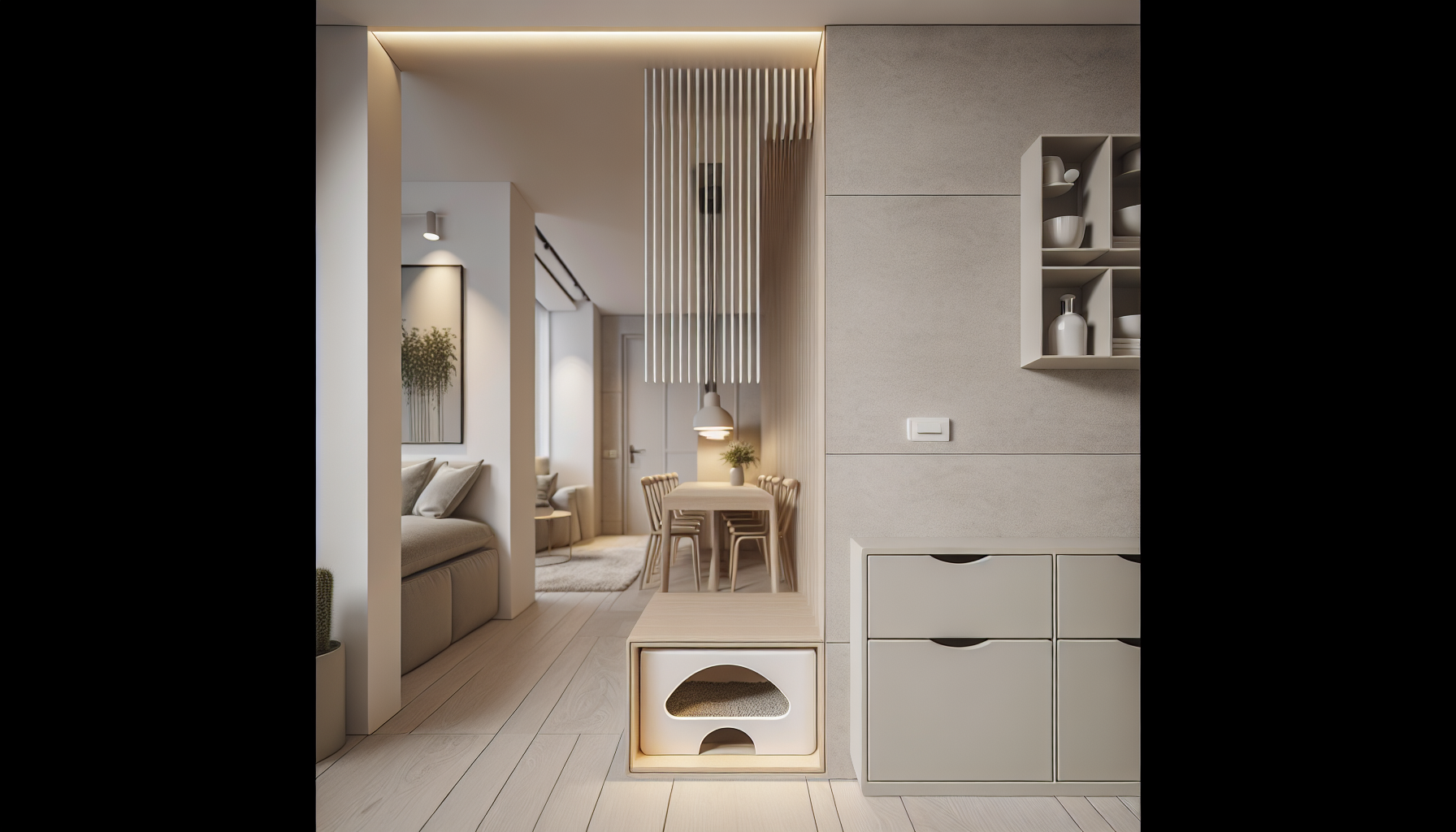
Living with a cat in a studio or one-bedroom apartment is a different proposition from doing the same in a house. The litter box is closer to where you sleep, eat, and work. There's no hallway to contain the smell. And if your cat tracks litter across the floor, you're stepping in it within minutes.
The good news: the right litter makes a measurable difference in a small space. The bad news: most litter marketing is designed for spacious basements and laundry rooms, not 40-square-metre flats.
What "Small Apartment Suitable" Actually Means
Before picking a litter, it's worth being specific about what you're optimising for. In a small apartment, these are the four things that matter most:
Odour containment. In a 30sqm flat, the litter box is essentially in your living room. Odour-control performance isn't optional — it's the primary filter.
Low dust. Airborne litter dust disperses fast in a small, enclosed space. If you're sensitive to particles or have a small ventilation system, dust level matters more than in a house.
Minimal tracking. Every grain your cat carries out spreads across the surfaces you use most. Tracking control isn't just about cleaning — it's about air quality and hygiene in a shared space.
Clumping efficiency. In a small apartment, you're more likely to do daily spot cleans rather than full changes. A fast-clumping litter that holds moisture tightly makes daily scooping far more effective.
Litter Types Ranked for Small Apartments
Crystal (silica gel) litter is the strongest performer in small spaces. It absorbs urine completely, dries solid waste rapidly, and produces almost no dust. A single cat in a well-sized crystal tray can go 2–3 weeks with just daily scooping. The trade-off is cost — crystal litter is typically 2–3x the price of clay per month. Check price on Chewy →
Fine-grain clumping clay is the most cost-effective option. Look for a formula specifically marketed as low-dust — many standard clays produce significant airborne particles when poured. The key is finding a brand that clumps tightly without crumbling, which reduces the amount of material that breaks down into dust. Some premium clay litters now incorporate activated carbon for additional odour neutralisation, which is worth the small price premium in a small space.
Walnut shell litter is a natural option that performs surprisingly well in compact living. It clumps firmly, produces minimal dust, and biodegrades — useful if you're composting or disposing of waste responsibly. Tracking is comparable to standard clay. Cat acceptance varies, so buy a small bag first. View on Amazon →
Paper and recycled cardboard litters are the lowest dust options available, and virtually zero tracking due to their large, smooth granules. The significant downside is odour control — these litters require very frequent scooping (twice daily minimum) to remain tolerable in a small space. If you're home most of the day and can commit to that routine, they're viable.
Pine and wheat litters offer natural odour control through their plant-based composition, but both can produce more tracking than clay, and neither clumps as tightly. In a very small apartment with limited ventilation, this can be a problem.
The Litter Box Setup Matters as Much as the Litter
Even the best litter won't save you if the box setup is wrong for a small space. A covered litter box in a studio apartment is almost always a mistake — it traps odour inside the enclosure, and the smell that escapes is more concentrated when you finally open it. An open, high-sided litter box gives odour a chance to dissipate while still preventing scatter.
Placement is critical. The litter box should be as far from food preparation and ventilation intakes as possible. If you have a bathroom with a window, that's usually the best location — even if it means the box lives behind the bathroom door. A litter box enclosure can work if it has active ventilation (a small USB fan venting to a window), but passive enclosures just accumulate smell.
Daily Habits That Make the Difference
In a small apartment, the litter box management routine has to be tighter than in a house. Scoop at least once daily — ideally twice, morning and evening. Leave the box to air for 10–15 minutes after scooping before closing any doors. Change the litter completely every 2–3 weeks regardless of what the manufacturer says; in a small space, you're simply closer to the box and more aware of gradual odour buildup.
Keep a small trash can with a tight lid next to the litter box. In a small apartment, walking across the flat to dispose of scooped waste tracks both litter and odour through your living space.
The Bottom Line
For most people in small apartments, a quality crystal litter is the most practical choice — the superior odour control justifies the cost when the alternative is living with a noticeable smell in your main living space. If cost is a hard constraint, a fine-grain low-dust clumping clay with carbon additive is the next best option. Either way, an open box design and daily scooping are non-negotiable in a compact space.